
Major Investment Brings New Momentum to VLCAD Gene Therapy Research
Rare Ventures and the Richard King Mellon Foundation are investing in the future of rare disease research, and VLCAD deficiency is among the first diseases selected.
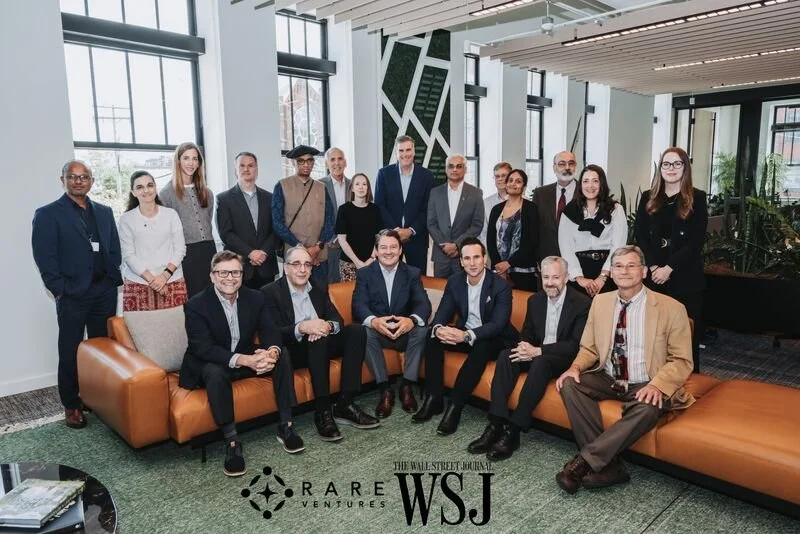
Photo Credit: Wall Street Journal
There is exciting news for the VLCAD deficiency community.
The Richard King Mellon Foundation has committed up to $25 million to launch Rare Ventures, a Pittsburgh-based initiative created to help accelerate promising rare disease research toward treatments and cures.
And VLCAD deficiency is one of the first seven rare diseases selected for the initiative.
For individuals and families living with VLCAD deficiency, this announcement represents an important investment in research that could help move VLCAD gene therapy closer to clinical trials.
Click here to read the full article.
What Is Rare Ventures?
Developing treatments for rare diseases presents unique challenges. Even when promising research exists, limited patient populations, funding gaps, regulatory hurdles and the high costs associated with drug development can make it difficult to move discoveries from the laboratory to patients.
Rare Ventures was created to help bridge that gap.
The initiative brings together expertise from research institutions, healthcare systems, biotechnology companies and rare disease organizations to help promising therapies navigate the complicated path from scientific discovery through clinical development.
The effort includes collaboration with organizations and institutions such as UPMC Children’s Hospital of Pittsburgh, the University of Pittsburgh, Carnegie Mellon University, Stanford Medicine, ElevateBio and EB Research Partnership.
The first seven rare diseases identified for Rare Ventures include:
VLCAD deficiency
Epidermolysis bullosa
PACS1 syndrome
Autosomal dominant leukodystrophy with autonomic disease
FAM161A gene defects
Oculocutaneous albinism type 1A
Pyruvate dehydrogenase deficiency
For our community, the inclusion of Very Long-Chain Acyl-CoA Dehydrogenase (VLCAD) deficiency is especially significant.
What This Investment Means for VLCAD Gene Therapy
Dr. Jerry Vockley and his research team at UPMC Children’s Hospital of Pittsburgh have been working to develop new approaches to treating VLCAD deficiency, including gene therapy.
Following the Rare Ventures announcement, Dr. Vockley shared an exciting update with Maddie’s Spark Foundation about how his portion of the funding will be used:
“My portion of the funding will be used to complete pre-IND studies for VLCAD gene therapy and then move to a Phase 1/2 clinical trial in the next 2–3 years.”
— Dr. Jerry Vockley
For the VLCAD community, those words carry tremendous significance.
There is currently no cure for VLCAD deficiency. Treatment focuses on preventing metabolic crises and managing the disease through nutrition, medications, avoidance of prolonged fasting, monitoring and emergency interventions when needed.
Gene therapy has the potential to approach VLCAD differently by addressing the underlying genetic cause of the disease.
While there is still substantial research ahead, this investment could help move that work another important step forward.
What Are Pre-IND Studies?
Before an investigational therapy can be tested in people, researchers must complete extensive preclinical research.
The pre-IND stage helps researchers gather the scientific information needed before seeking authorization from the U.S. Food and Drug Administration to begin human clinical trials.
This work can include evaluating the therapy's safety, studying how it behaves in the body, determining potential dosing and completing other studies necessary to support future clinical development.
Completing these studies is therefore an important milestone on the path toward a clinical trial.
According to Dr. Vockley, the goal is to use this new funding to complete that work and then move toward a Phase 1/2 clinical trial for VLCAD gene therapy within the next two to three years.
That does not mean a gene therapy will be available in two or three years. Clinical trials are part of a much longer research and regulatory process, and timelines can change as researchers learn more.
But it does mean there is a clearer path toward bringing this research into the clinic.
And for a rare disease community that has spent decades waiting for more treatment options, that matters.
Check out this video from the American Society of Gene + Cell Therapy to learn more about the pre-IND meeting phase.
Why Rare Disease Investment Matters
More than 10,000 rare diseases have been identified, yet the overwhelming majority still have no approved treatment.
One of the greatest challenges in rare disease research isn't always a lack of promising science. It is finding the resources, infrastructure and investment necessary to move that science forward.
That's why an investment of this magnitude matters.
Rare Ventures is designed to bring together the scientific, clinical, regulatory, manufacturing and commercialization expertise needed to help promising rare disease therapies advance.
For VLCAD deficiency, it means researchers aren't simply asking what might someday be possible.
They are working toward the next steps required to test those possibilities.
What This Means to Maddie's Spark Foundation
At Maddie's Spark Foundation, we believe families living with VLCAD deficiency deserve better tools to manage this rare disease today and better treatments for the future.
That's why advancing research is at the heart of our mission.
Our work with Dr. Vockley and his research team has allowed us to see firsthand just how much promising VLCAD research is happening right here in Pittsburgh, from developing better disease-management tools to investigating new therapies and ultimately working toward treatments that could change what it means to live with VLCAD deficiency.
This announcement gives our community another reason to hope.
There is still a long road between laboratory research and an approved gene therapy. There will be challenges, questions and milestones along the way.
But there is also progress.
There is investment.
There are researchers who have dedicated their careers to changing the future of this disease.
And now there are significant resources being put behind moving VLCAD gene therapy toward its next stage.
For every family who has sat in a hospital room, worried about the next illness, watched CK levels climb or wondered what the future might hold, this is the kind of progress we have been fighting for.
The Future of VLCAD Research Is Moving Forward
We are incredibly grateful to the Richard King Mellon Foundation, Rare Ventures, Dr. Jerry Vockley and his research team, and everyone working to advance treatments for VLCAD deficiency and other rare diseases.
Maddie's Spark Foundation will continue supporting innovative VLCAD research, advocating for families and keeping our community informed as this work progresses.
Because changing the future of VLCAD won't happen overnight.
It happens one discovery, one investment, one partnership and one spark at a time.
And today, the future of VLCAD research looks a little brighter.
Learn More
Read more about the Rare Ventures investment and the seven rare diseases selected for its initial work through the TribLive announcement.
To learn more about Maddie's Spark Foundation and our work to accelerate VLCAD deficiency research, explore our Early SparCK Initiative and ways you can Be the Spark for the future of VLCAD.
