
But She Doesn't Look Sick: What Rhabdomyolysis Taught Our Family About Advocacy, Awareness, and Why We Need Better Tools
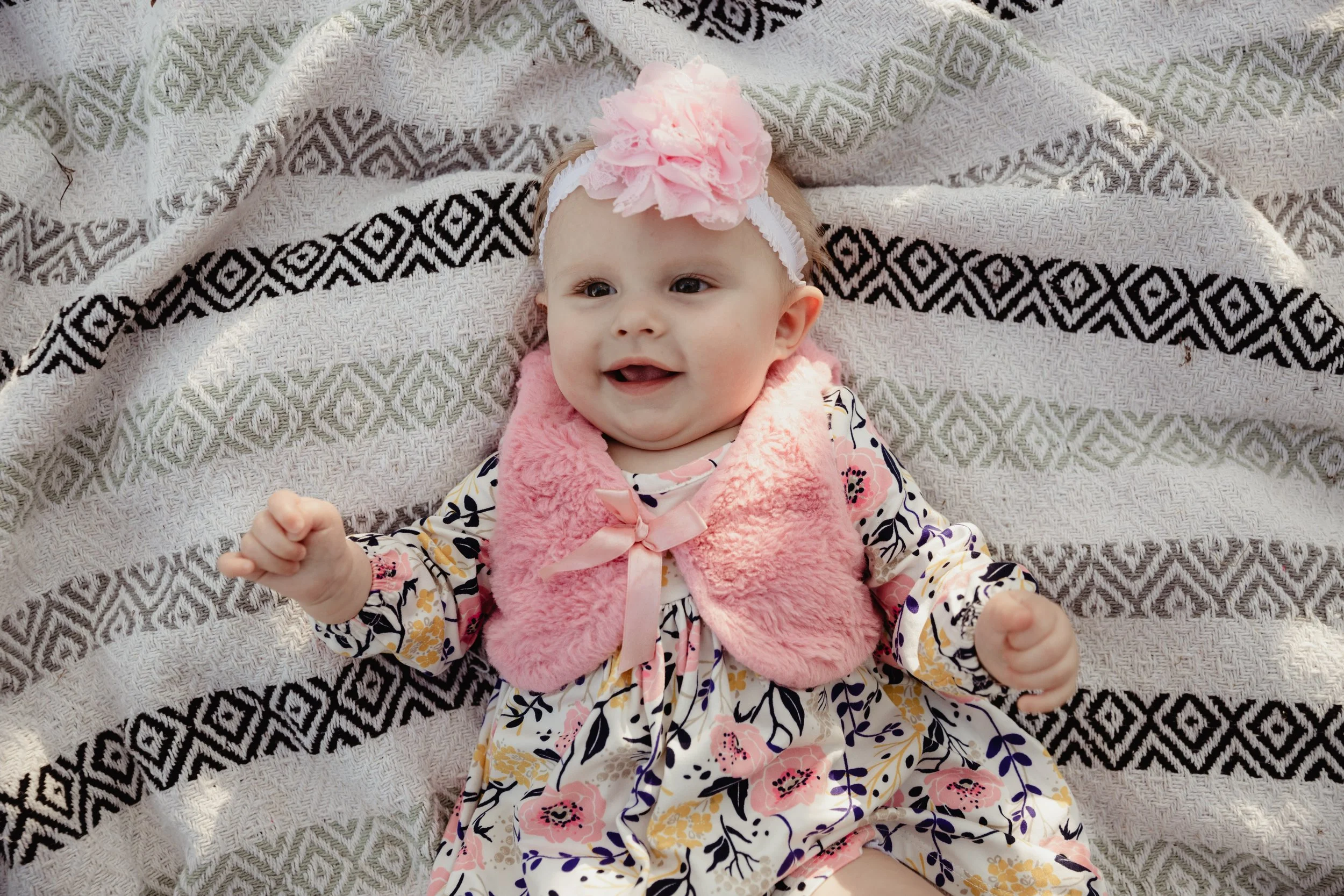

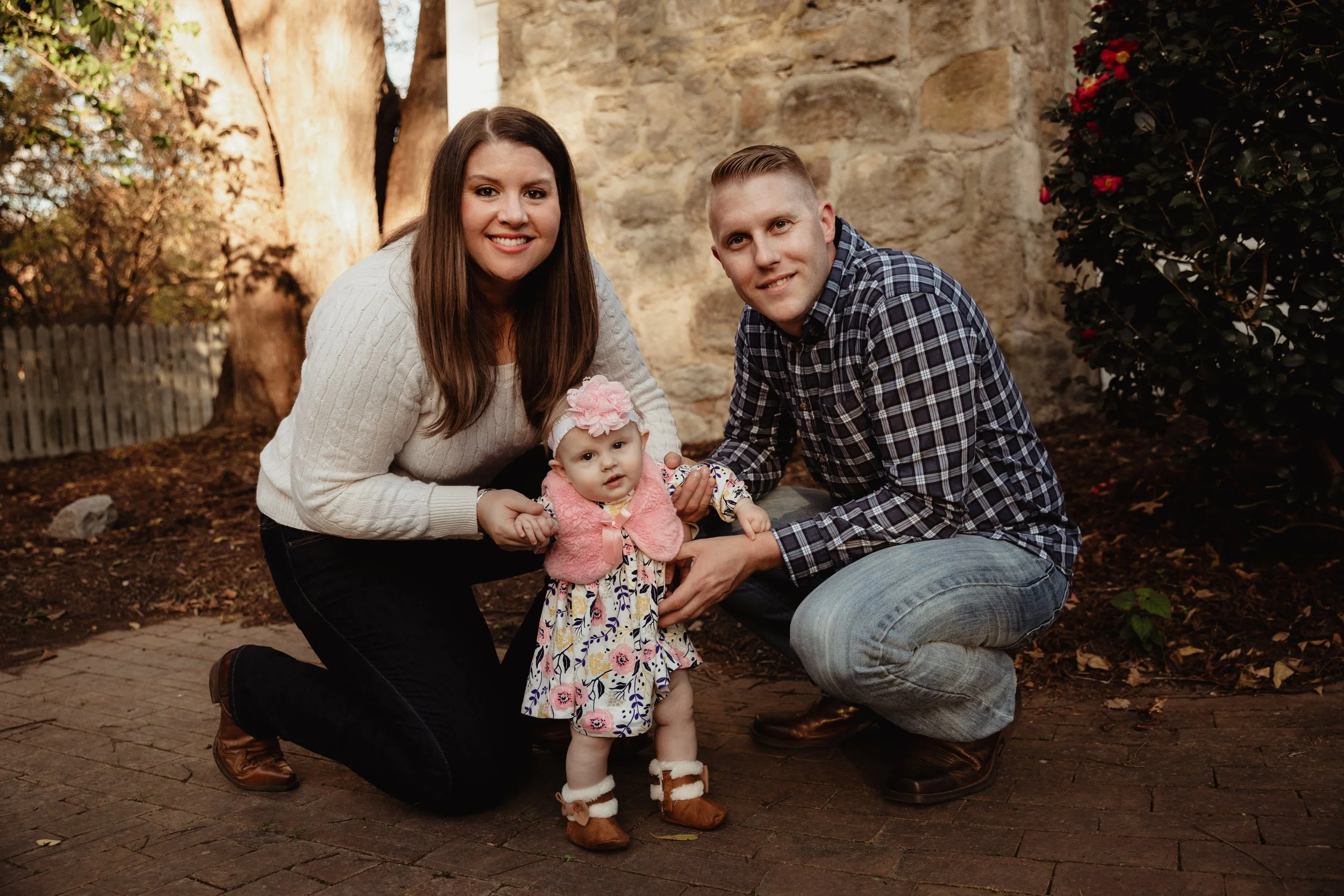
At 5:00 PM, we were taking family photos.
Maddie was five months old, smiling, laughing, and completely herself. Looking back at those pictures today, it's hard to believe that just six hours later we would be sitting in a pediatric emergency room searching for answers. In every photo, she looks happy and healthy. There is no sign that her body was beginning to struggle. There is no warning that we were about to face our second hospitalization for rhabdomyolysis.
By 11:00 PM that same night, everything had changed.
After speaking with the on-call genetics team, we were advised to take Maddie to the nearest pediatric emergency department. She had become increasingly fussy and irritable, was crying inconsolably, and had started refusing feeds. At five months old, she couldn't tell us what hurt. She couldn't explain that her muscles were under stress or that her body was struggling to produce enough energy. All we knew was that she wasn't acting like herself.
At the time, we assumed we were doing exactly what we were supposed to do. We called the specialists. We followed their instructions. We went to a pediatric emergency room. We showed them our emergency protocol letter.
What we quickly learned was that being in a pediatric emergency room and being in a hospital that understands VLCADD are not always the same thing.
Understanding Rhabdomyolysis
Rhabdomyolysis, often called "rhabdo," occurs when muscle tissue breaks down and releases toxins into the bloodstream. For individuals with VLCAD deficiency, illness, fasting, physical stress, and other triggers can cause the body to run out of usable energy. When that happens, muscles can begin to break down.
One of the primary ways clinicians monitor for rhabdomyolysis is by checking a laboratory value called Creatine Kinase, or CK. CK serves as an important indicator of muscle and heart health. When muscle cells become damaged, CK levels rise. Elevated CK levels can signal that the body is under significant stress and that muscle breakdown is occurring. Because VLCADD can affect both skeletal muscle and cardiac muscle, CK is one of the most important markers families and clinicians watch during illness and periods of increased metabolic stress.
The challenge is that rhabdomyolysis doesn't always look the way people expect it to.
Textbooks often describe symptoms such as muscle pain, weakness, fatigue, or dark urine. But young children can't always tell you that their muscles hurt. For many children with VLCADD, symptoms can be subtle and easy to miss. Irritability, emotional dysregulation, tiptoe walking, refusing to walk, changes in behavior, wanting to be carried, decreased appetite, or simply not acting like themselves can sometimes be the first signs that something is wrong.
That night, Maddie's symptoms didn't look dramatic. She was fussy. She was irritable. She didn't want to eat. Looking back, those seemingly small changes were her body's way of telling us something much bigger was happening.
The Longest Night
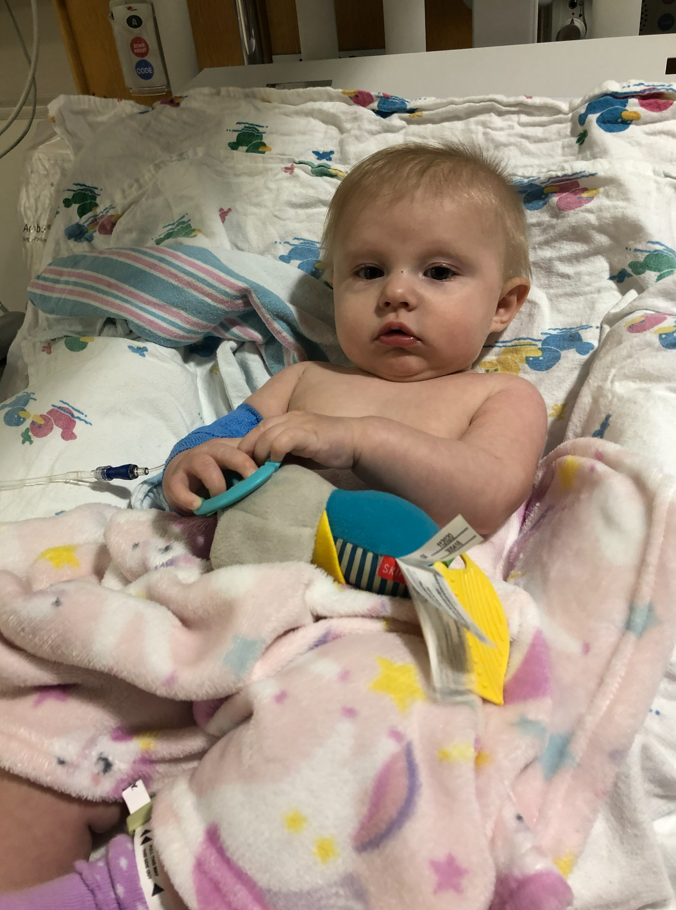
For the next six hours, we sat in that emergency room waiting for answers.
Maddie was hooked up to an IV. Bloodwork was drawn. Nurses came and went. Although we didn't fully understand it at the time, the IV wasn't just providing fluids. She was receiving a high-glucose D10 solution designed to give her body a quick source of energy and stop it from having to break down muscle for fuel. The goal was to provide enough glucose to meet her body's energy demands while also helping flush the byproducts of muscle breakdown out of her system.
At the same time, the medical team was monitoring much more than just her CK level. They were watching her kidney function, liver function, heart health, and hydration status closely. When rhabdomyolysis occurs, the damage isn't limited to the muscles themselves. Severe muscle breakdown can place tremendous stress on other organs, particularly the kidneys, and in individuals with VLCADD, the heart is always a concern because it relies heavily on energy to function properly.
As new rare disease parents, we didn't know any of that. We simply knew our daughter was connected to an IV and that everyone seemed concerned. We assumed that if something serious was happening, someone would explain it to us.
But those updates never came.
Hour after hour passed with very little communication. No one explained her test results. No one told us whether she was improving or getting worse. No one sat down and explained the plan. We simply waited.
It wasn't until later until we got transferred to a children’s hospital 45 minutes away (more on that later) that we learned just how serious the situation actually was.
Maddie's CK level had climbed to more than 30,000 U/L.
For context, a typical CK level is generally somewhere between 60 and 145 U/L. A level of 30,000 wasn't just elevated. It was a sign that significant muscle damage was occurring inside her body.
And yet, sitting in that hospital room, we had no idea.
Six hours earlier, she had been smiling for family photos.
A few hours later, her CK was over 30,000.
That reality is one of the hardest things to explain about VLCADD. Children don't always look critically ill when a serious metabolic event is occurring. The symptoms can be subtle. A baby who is fussier than normal. A child who doesn't want to eat. Irritability. A change in behavior. Sometimes those small changes are the only clues families have before a medical emergency unfolds.
Yet during those six hours, we didn't know her CK level. We didn't know how concerned the medical team was. We didn't know whether she was improving or declining. We were simply sitting beside our baby, waiting for answers that never came.
Then, after six long hours, we were told that Maddie was being transferred to the children's hospital where her metabolic specialists practiced and that the team there would discuss everything with us.
That was it.
No real explanation. No discussion about what the lab results showed. No conversation about why the transfer was needed.
As a parent, your mind immediately goes to the worst-case scenario.
Why are we being transferred? How serious is this? What aren't they telling us? Is my baby okay?
Looking back now, five years and 20 hospitalizations later, I realize how much I didn't know.
And if I'm being honest, part of me is still angry.
Not because Maddie was transferred. She absolutely belonged in the care of a team experienced in metabolic disorders. What makes me angry is that I didn't know then what I know now. I didn't know that it was okay to ask harder questions. I didn't know that it was okay to push for answers. I didn't know that it was okay to advocate for clearer communication. And I didn’t know that it was okay to tell the hospital no, we’re staying.
Families deserve explanations. Families deserve updates. Families deserve to understand what is happening to their child.
And while no one ever said it directly, it felt like we were being passed to another hospital because no one wanted to manage a disorder they didn't understand.
Unfortunately, this is not a unique experience.
Families living with VLCADD and other metabolic disorders face these challenges every day when emergency care is needed. Many healthcare providers will never encounter VLCADD during their careers. Most have never managed a metabolic crisis. Many have never seen rhabdomyolysis in a child that young. That lack of familiarity creates delays, confusion, and unnecessary stress during moments when families are already terrified.
This is why awareness matters.
Awareness isn't just about helping the public understand what VLCADD stands for. Awareness can directly impact care. Awareness can help healthcare providers recognize symptoms sooner. Awareness can improve communication. Awareness can help ensure that families are taken seriously when they say something isn't right.
The Ambulance Ride I'll Never Forget
Around 5:00 AM, Maddie was loaded into an ambulance.
Because of COVID restrictions, I was told I couldn't ride with her.
Even now, years later, I can still picture that moment. Watching your five-month-old baby leave in an ambulance without you goes against every parental instinct. Everything in you wants to stay by their side, yet there was nothing I could do.
When I finally arrived at the children’s hospital and met with the metabolic team, one of the geneticists looked at me and said, "I'm surprised to see you here. What happened overnight?"
That question stopped me in my tracks.
It immediately became clear that critical pieces of information had not been communicated during the transfer. The team that knew Maddie best didn't fully know what had happened. We had spent six hours waiting for answers, only to discover that information wasn't flowing between hospitals the way we assumed it was.
That moment was another lesson in rare disease advocacy. It taught us that parents often become the bridge between specialists, emergency providers, and hospital systems. Not because we want to be, but because we have to be.
Learning to Speak Up
That hospitalization changed me.
It taught me that advocating for Maddie wasn't optional. It taught me that parents often become more knowledgeable about their child's rare disease than physicians who may only encounter it once or twice during their careers. It taught me to ask questions, challenge assumptions, request consultations, and speak up when something didn't feel right.
Most importantly, it taught me that every child with VLCADD is different.
Not every episode starts with obvious symptoms. Not every child experiences muscle pain. Not every child presents the same way. And not every healthcare provider recognizes what we as parents are seeing.
That reality is what makes VLCADD so challenging.
Since that night, Maddie has experienced eighteen additional hospitalizations. Many followed a similar pattern. A child who seemed perfectly fine hours earlier suddenly wasn't. No dramatic warning signs. No flashing red lights. Just me as a mom recognizing subtle changes and wondering whether muscle breakdown was occurring beneath the surface.
Why Research Matters
Those experiences are one of the reasons we launched the Early SparCK Initiative.
Through our partnership with UPMC Children's Hospital Foundation and the research team led by Dr. Jerry Vockley, we are helping support the research of a continuous at-home CK monitoring device. Instead of relying solely on symptoms, repeated blood draws, emergency room visits, educated guesses, and a mom’s intuition, families and clinicians could have access to real-time information about muscle and heart health.
For families like ours, that isn't simply convenient.
It could be transformational.
The reality is that scenarios like ours continue to happen every day. Children with VLCADD still present to emergency rooms where providers may have never seen the disorder before. Parents still find themselves advocating during moments of crisis. Families still wait for lab results while wondering whether muscle breakdown is occurring.
We believe they deserve better tools. Better data. Better answers.
Why Awareness Matters
When people ask why awareness matters, this is why.
Awareness isn't just about helping someone recognize the words "VLCAD deficiency." It's about helping healthcare providers understand the urgency behind a seemingly fussy baby. It's about helping emergency departments recognize that symptoms don't always fit neatly into a textbook. It's about helping families feel heard when they know something is wrong, even when they can't yet explain why.
And it's about accelerating research that can change what living with VLCADD looks like in the future.
Because no parent should have to watch their five-month-old leave in an ambulance alone.
No family should spend hours waiting for answers wondering if there child is having a medical emergency.
And no family should have to rely solely on intuition and intermittent lab work when better tools can be possible.
That's the future we're working toward through Maddie's Spark Foundation.
One spark at a time.
