
Putting VLCAD on the Map During World Mitochondrial Disease Week
VLCAD deficiency may not always be included in conversations about primary mitochondrial disease, but it belongs in the broader conversation about mitochondrial energy.
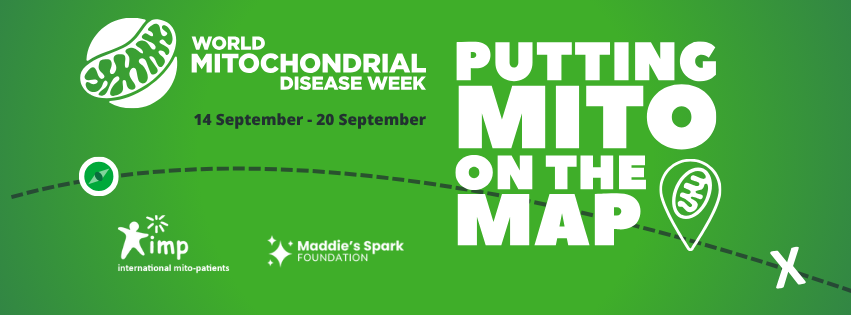
World Mitochondrial Disease Week, observed September 14–20, 2026, brings people around the world together to raise awareness of disorders that affect how the body produces and uses energy. This year’s theme, Putting Mito on the Map, is focused on making these conditions, and the people, organizations, advocates, and researchers behind them, more visible.
For Maddie’s Spark Foundation, this is an opportunity to make sure VLCAD deficiency and the individuals and families affected by it are included.
What Do Mitochondria Have to Do With VLCAD?
Most of us learned that mitochondria are the “powerhouses of the cell.” Put simply, they help turn nutrients into the energy our bodies need to function.
VLCAD deficiency is classified as a long-chain fatty acid oxidation disorder. It is not typically classified as a primary mitochondrial disease, but the process affected by VLCAD takes place inside the mitochondria.
Normally, the body uses the very long-chain acyl-CoA dehydrogenase (VLCAD) enzyme to begin breaking down long-chain fats for energy. Individuals with VLCAD do not have enough of this working enzyme. As a result, their bodies cannot efficiently access energy stored in certain fats, especially during illness, fasting, prolonged activity, or other times when more fuel is needed.
Depending on the individual, this can lead to serious complications, including:
Dangerously low blood sugar
Muscle pain or weakness
Elevated creatine kinase, commonly called CK
Severe muscle breakdown, known as rhabdomyolysis
Cardiomyopathy and other heart concerns
Kidney injury following severe muscle breakdown
VLCAD does not look the same for everyone. Some individuals experience symptoms primarily during illness or physical activity. Others may develop serious complications with very few early warning signs.
For many families, that uncertainty becomes part of everyday life.
Why VLCAD Needs Greater Visibility
VLCAD is rare, and many people have never heard of it until someone they love is diagnosed.
Families often find themselves explaining the condition to relatives, teachers, coaches, employers, emergency room teams, and sometimes healthcare professionals who have never treated someone with VLCAD.
When VLCAD is missing from larger conversations about mitochondrial energy disorders, the needs of this community can be easier to overlook.
Greater visibility can:
Help healthcare professionals recognize the condition and understand its risks
Make schools, workplaces, and communities better prepared to support individuals with VLCAD
Help newly diagnosed families find reliable information and connect with others
Bring greater attention to gaps in monitoring and treatment
Show researchers and funders that the VLCAD community is here and ready for progress
Putting VLCAD on the map is about more than adding its name to a list. It is about making sure the experiences and needs of children and adults living with VLCAD are recognized when decisions are made about education, healthcare, research, and funding.
Turning Awareness Into Research
Awareness is important, but it should lead somewhere.
Maddie’s Spark Foundation created the Early SparCK Initiative to raise $100,000 for research led by Dr. Jerry Vockley and his team at UPMC Children’s Hospital of Pittsburgh.
The team is developing an emerging at-home continuous disease management device designed to monitor heart and muscle health.
Today, families often rely on bloodwork to check CK levels when muscle breakdown is suspected. This can mean repeated trips to a hospital or laboratory, difficult blood draws, and waiting for results while wondering what may be happening inside the body.
For individuals whose CK can rise quickly or without clear early symptoms, an at-home monitoring tool could provide families and medical teams with information sooner. It could help identify changes before a situation becomes more serious and offer something VLCAD families do not always have: an earlier warning.
Research takes time, but this is meaningful progress toward a disease-management tool created with the needs of VLCAD families in mind.
One hundred percent of every donation to the Early SparCK Initiative supports Dr. Vockley’s VLCAD research at UPMC Children’s Hospital of Pittsburgh.
Support the Early SparCK Initiative
How You Can Help Put VLCAD on the Map
You do not need to be a scientist or have a personal connection to VLCAD to make a difference.
Learn and Share
Take a few minutes to learn about VLCAD deficiency, then share what you learn with someone else. One post or conversation may introduce VLCAD to a teacher, healthcare professional, community leader, policymaker, or future supporter.Add Your Voice to the Global Mito Map
The Global Mito Map is creating a visual picture of the worldwide community working to increase awareness and advance research. Patients, families, organizations, events, research projects, and awareness activities can all be represented. Explore the Global Mito Map
Share Your VLCAD Story
Medical definitions explain the science, but personal stories show what living with VLCAD actually looks like. By sharing the challenges, uncertainty, hospital stays, milestones, and everyday moments, individuals and families can help others understand why greater awareness and better options are needed. Share Your Story Here.Support VLCAD Research
Every donation to the Early SparCK Initiative helps move this emerging monitoring technology closer to clinical trials. Whether you give, create a fundraiser, invite your employer to become a partner, or share the initiative with your community, your support helps move VLCAD research forward. Make a Donation to VLCAD ResearchStay Connected
Join the Maddie’s Spark Foundation email community for VLCAD research updates, family resources, community stories, and new opportunities to get involved. Join Our Newsletter
Let’s Make Sure VLCAD Is Part of the Conversation
World Mitochondrial Disease Week lasts seven days, but the need for awareness, support, and research continues throughout the year.
The VLCAD community deserves to be represented in conversations about how the body produces energy. Families deserve better ways to understand what is happening inside the body. Children and adults living with VLCAD deserve more options for monitoring, treatment, and care.
This week, help Maddie’s Spark Foundation put VLCAD on the map.
Learn about VLCAD. Share the stories of those affected. Support the research. Be the Spark.
