
The Invisible Mental Load of Raising a Child With a Rare Disease
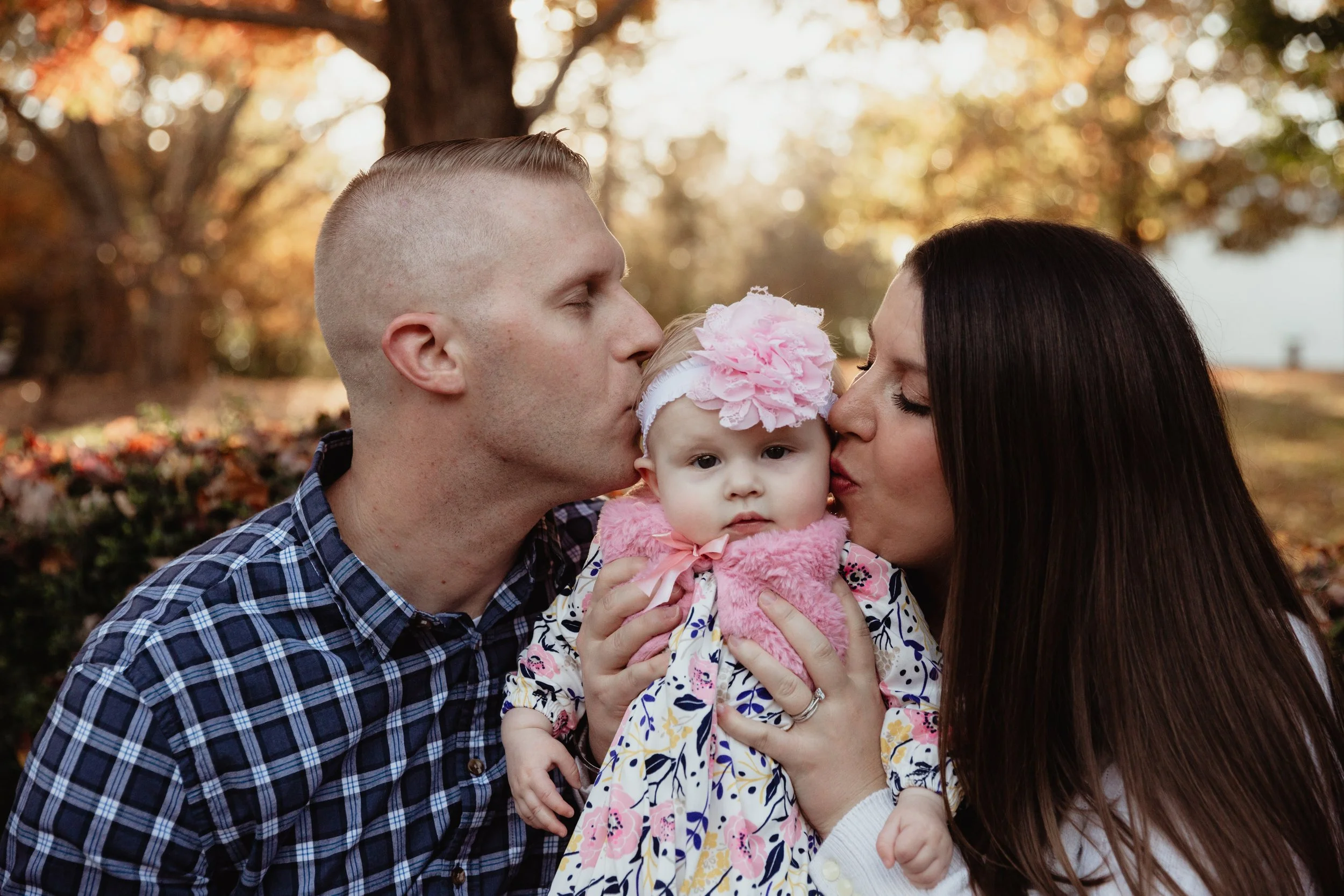
A Rare Disease Parent’s Perspective During Mental Health Awareness Month
May is Mental Health Awareness Month. In this personal story, Maddie’s mom, Ashley, shares the emotional realities of raising a child with VLCAD deficiency from medical trauma and caregiver burnout to finding support, connection, and community through rare disease advocacy.
I still remember watching the ambulance doors close.
Maddie was 5 months old.
She was strapped to a stretcher with an IV in her tiny arm as they rushed her into the ambulance, and I remember standing there in complete shock being told we couldn’t ride with her because of COVID protocols.
One minute we were sitting in a local pediatric emergency room being told she was stable.
The next, it felt like a scene out of Grey’s Anatomy — doctors and nurses moving quickly around us while everything around me blurred together and somehow I was just… frozen.
Frozen trying to understand what was happening.
Frozen trying to process why my baby suddenly needed transported.
Frozen trying to hold myself together while everyone else seemed to know exactly what to do.
And then suddenly she was being taken to a children’s hospital.
We were given almost no information other than, “The genetics specialist will explain more when you get there.”
No answers.
No real explanation.
No reassurance.
Just fear, confusion, and watching ambulance doors close on my 5 month old daughter while I stood there feeling completely helpless.
I remember the sound of monitors beeping.
The rush of people moving around us.
The feeling of trying not to completely fall apart in front of strangers.
And then suddenly she was gone.
I don’t think people talk enough about what moments like that do to a parent and their mental health.
And this wasn’t even our diagnosis story.
This was an emergency room visit after a metabolic crisis related to her VLCAD deficiency. Just one of the many moments that would eventually shape what rare disease parenting looked like for our family.
The Parts People Don’t See
May is Mental Health Awareness Month, and for rare disease parents, mental health is something we need to talk about more honestly.
Because while so much attention is placed on diagnoses, medications, emergency plans, and specialist appointments, there is another side of rare disease that often stays hidden: What it does to the parents trying to hold everything together.
People see the appointments.
The hospital stays.
The medications.
The bloodwork.
The emergency room visits.
What they don’t always see is the mental load that comes with it all.
The constant scanning for symptoms.
The fear every time your child gets sick.
The anxiety of wondering whether you’re overreacting or not reacting fast enough.
The exhaustion of always needing a backup plan.
The way your brain never fully shuts off, even during the good moments.
Rare disease parenting changes your nervous system.
Even when things are okay, your brain never fully believes things are okay for long.
There’s grief in this life that’s difficult to explain unless you’ve lived it yourself.
Not grief over who your child is.
Never that.
But grief over how different parenthood looks than what you imagined it would.
You picture birthday parties and vacations and carefree childhood moments.
You don’t picture emergency protocols saved in your phone.
You don’t picture learning medical terminology you never wanted to know.
You don’t picture keeping snacks beside your bed because you’re afraid of fasting emergencies.
You don’t picture your child becoming familiar with IVs and blood draws before kindergarten.
And somehow, over time, all of it becomes normal.
Or at least your version of normal.
The Trauma That Follows You Home
I used to think trauma only existed during the “big” moments.
The hospital admissions.
The emergencies.
The scary phone calls.
But over the past five years, I’ve realized trauma also lives in the smaller moments that happen over and over again.
At almost 5 years old, medical trauma still follows us.
There are appointments where Maddie starts crying before anyone even touches her.
Sometimes all it takes is seeing gloves.
Or alcohol wipes.
Or someone walking toward her too quickly wearing scrubs.
Sometimes she immediately pulls away when people try to grab her hands or arms because she already assumes something painful is about to happen.
And honestly, that part breaks me in ways I wasn’t prepared for.
Because as her mom, there’s this awful feeling of knowing the people trying to help her are also the people she’s learned to fear.
Routine bloodwork is necessary for children living with VLCAD deficiency. Monitoring keeps her safe.
But that knowledge does not make it easier to watch your child sob while multiple people try to hold her still for labs.
There are moments where it feels like your child becomes a pincushion simply because you are trying to protect them.
And no matter how many times you go through it, it never really gets easier.
I think a lot of rare disease parents carry guilt around that.
The feeling that you wish you could do more.
Fix more.
Protect more.
Take the fear away somehow.
But so often, we can’t.
Living in Survival Mode
One of the hardest parts of rare disease parenting is how invisible the emotional weight can be.
People may see your child during a hospital stay, but they don’t see what happens afterward.
The replaying of conversations in your head.
The panic every time symptoms feel “off.”
The second-guessing.
The “what ifs.”
The exhaustion that comes from never fully relaxing or getting a full nights sleep.
The way your body stays tense even during calm moments because you know how quickly things can change.
You become used to functioning in survival mode.
And after a while, survival mode starts feeling normal.
Many rare disease parents quietly experience:
Anxiety
Depression
Chronic stress
Caregiver burnout
Isolation
Sleep issues
Emotional exhaustion
But parents rarely talk about it because there’s this pressure to stay strong all the time.
The truth is, constantly carrying the responsibility of keeping your child medically safe is heavy.
And sometimes it’s lonely.
Really lonely.
Especially because rare diseases are rare.
Finding someone who truly understands this life can feel nearly impossible at times.
Why Mental Health Awareness Month Matters
Mental Health Awareness Month exists to remind people that mental health deserves care, support, and attention just like physical health does.
Organizations like NAMI (National Alliance on Mental Illness) and SAMHSA (Substance Abuse and Mental Health Services Administration use May to encourage honest conversations around mental health, reduce stigma, and help people find support.
And honestly, rare disease parents need those conversations too.
Because caregiver mental health matters.
Parents matter too.
Taking care of yourself does not mean you love your child any less.
It does not mean you are weak.
And it does not mean you are failing.
It means you are human.
Finding People Who Understand
One of the most healing things that has happened for me over the years has been finding other rare disease parents.
People who don’t need the long explanation.
People who understand why a fever can send you into panic mode.
People who understand hospital trauma, emergency plans, food anxiety, medical PTSD, and the exhaustion of constantly carrying fear in the back of your mind.
Organizations like FOD Family Support Group have created incredible support systems for families living with fatty acid oxidation disorders, including VLCAD deficiency. Their community includes educational resources, conferences, advocacy efforts, and online support communities where families can connect with others who truly understand this journey.
MitoAction is another incredible organization that offers virtual support groups, caregiver support calls, peer support programs, educational resources, an annual conference, and mental health support for families affected by mitochondrial and metabolic disorders.
Some resources that may help rare disease parents and caregivers include:
Sometimes support does not look like solving the problem.
Sometimes support is simply hearing another parent say:
“We understand.”
“We’ve been there too.”
“You’re not alone.”
The Kind of Community We Hope to Build
One of the things I’ve learned over the past five years is how much rare disease parents need each other.
Sometimes you don’t need advice.
You just need someone who understands why you’re exhausted.
Someone who understands why your nervous system immediately panics when your child says they don’t feel well.
Someone who understands why routine lab work can leave both you and your child emotionally drained for the rest of the day.
Someone who understands the trauma that can walk through the door with every hospital visit.
That’s the kind of community we hope to build through Maddie’s Spark Foundation.
Yes, we are fighting for awareness.
Yes, we are advocating for research and better treatments for VLCAD deficiency and related long-chain fatty acid oxidation disorders.
But we are also building something deeply personal.
A place where families feel understood.
A place where parents can find support without judgment.
A place where nobody feels like they have to explain why this life feels heavy sometimes.
We want every family to know there is always a friendly face beside you on the hard days.
Someone who gets it.
Someone who listens.
Someone who reminds you that you are doing better than you think you are.
Because sometimes the most powerful words a rare disease parent can hear are:
“Me too.”
